

Repeated Shingle Repairs Can Cost More Than a New Roof
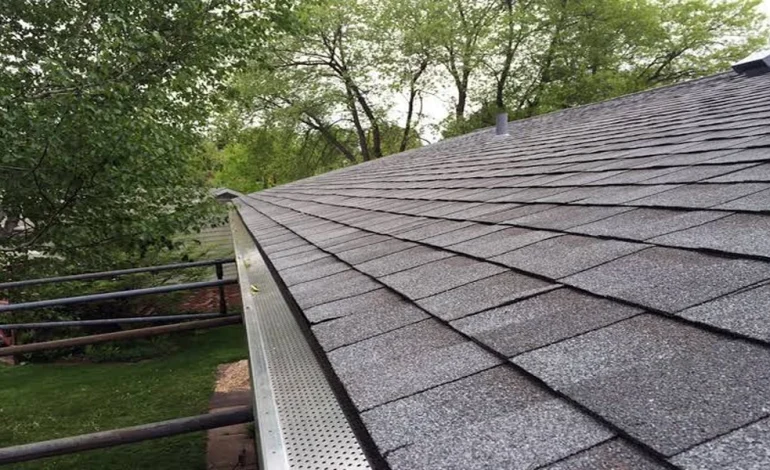

An asphalt shingle is mostly a delivery system for its granules. Those small ceramic-coated stones shield the asphalt underneath from ultraviolet light, and once they wash into the gutters, the exposed asphalt dries out, curls and cracks far faster. In Central Texas, where summer roof surfaces regularly climb well past 150°F and UV exposure is intense for most of the year, that breakdown happens on a shorter clock than the label on the bundle suggests.
That is why the choice between a repair and an asphalt roof replacement in Austin is rarely about one bad spot. It is about how much life the rest of the roof still has. A $400 patch makes sense on a 9-year-old roof with healthy granules. The same patch on a 20-year-old roof that has already lived through several hail seasons usually just delays a bigger bill and adds to it.
Hail complicates the picture. A storm can bruise shingles, crack the fiberglass mat and knock granules loose without leaving anything you would notice from the driveway. Wind gusts from spring thunderstorms then lift weakened tabs and break the seal strips that hold them down. The ladder below moves from the cheapest fix to the most involved, with the signs that tell you which rung fits your roof.
When the answer lands near the top of that ladder, Stanley Built Roofing handles full asphalt roof replacement in Austin as part of its roof replacement work, starting each job with a complete tear-off and an inspection of the decking underneath. Smaller problems get roof repairs rather than a sales pitch, and the free roof and attic inspections come with a written report and photos so you can see the damage for yourself. If your roof is past its middle years or took a hit in the last storm, request a replacement estimate and compare it against what continued repairs would cost.
Rung One: Sealing and Spot Repairs
This is the right rung when the roof is under roughly 12 years old, granules are mostly intact, and the problem is isolated. Typical market pricing for minor repairs runs from a few hundred dollars to around $1,000.
- Reseal lifted tabs with roofing cement where the factory seal strip let go in a wind event but the shingle itself is not creased.
- Replace cracked rubber pipe boots, which often fail in Texas heat long before the shingles around them do.
- Reseal or replace exposed nail heads and failing caulk at flashing transitions.
- Swap out a handful of individual shingles that were torn or creased, matching color and profile as closely as possible.
The warning sign that you have outgrown this rung is frequency. If you are calling for a spot repair more than once a year, the roof is telling you something larger.
Rung Two: Replacing Damaged Sections
Section replacement suits damage concentrated on one slope, such as the side facing a prevailing storm direction or an area under an overhanging tree. Market ranges typically fall between $1,000 and $4,000 depending on size and pitch.
- Confirm the damage is truly localized by checking the other slopes for granule loss, soft spots and hail bruising.
- Remove the damaged shingles and inspect the underlayment and decking in that area.
- Replace underlayment where it is torn or saturated, then install new shingles woven into the existing courses.
- Accept that new shingles will look slightly different from weathered ones for a few years.
The trade-off is uniformity. A patched slope ages on a different schedule than the rest of the roof, and some insurance carriers and HOAs care about that mismatch.
Choosing Shingles Before the Upper Rungs
If you are heading toward a full replacement, the shingle choice matters more than most homeowners expect. Three-tab shingles are flat, lighter and cheaper, but they typically carry lower wind ratings and shorter service lives. Architectural (laminated) shingles have a thicker, layered build that handles wind and heat better and is now the standard on most homes.
For hail, look for a UL 2218 Class 4 impact rating, the highest class in that test. For wind, the common labels are ASTM D3161 Class F (tested at 110 mph) and ASTM D7158 Class H (rated for 150 mph). Labels alone do not tell the whole story, though. In its 2025 update, IBHS evaluated 24 impact-resistant asphalt shingles using lab-made hailstones instead of the steel balls used in older tests, and found real performance gaps between products carrying the same impact-resistant label. Ask your contractor how a product scored before you commit, and check whether your insurer offers a discount for impact-rated roofing.
Rung Three: Full Tear-Off
A full replacement makes sense when the roof is 18 years or older, granule loss shows up across multiple slopes, shingles are curling or cracking widely, or hail damage is spread across the roof. National market ranges for architectural shingle replacement typically sit around $4 to $8 per square foot installed, with steep pitches and complex rooflines landing higher.
- Strip every layer of old shingles and underlayment down to the deck rather than layering over them, which traps heat and hides decking problems.
- Inspect the full deck for rot, delamination and loose sheathing.
- Install ice and water shield in valleys and around penetrations, then synthetic underlayment across the field.
- Replace drip edge, pipe boots and flashing instead of reusing worn parts.
- Install new shingles with the correct nailing pattern for the wind rating you are paying for.
- Upgrade ridge and soffit ventilation if the attic runs hot, since trapped heat shortens shingle life.
- Clean the site with a magnetic sweep for stray nails.
Rung Four: Tear-Off With Decking Repair
This is the top rung, and you often cannot know you are on it until the old shingles come off. Signs beforehand include a sagging roofline, spongy spots when walked, daylight visible through attic boards, and water stains on rafters. Decking replacement is usually priced per sheet, with general market ranges around $70 to $130 per sheet of plywood or OSB installed.
- Mark every soft, rotted or delaminated sheet after tear-off.
- Trace the moisture source, whether a failed flashing, a bad valley or poor attic ventilation, before covering anything.
- Cut out and replace damaged sheets, fastening to the rafters at proper spacing.
- Re-nail sound decking that has loosened over time.
- Continue with underlayment, flashing and shingles as in a standard tear-off.
A good estimate will list a per-sheet decking price up front so this rung does not arrive as a surprise. Whichever rung your roof lands on, the decision gets easier when you look at the whole roof’s remaining life rather than the one leak in front of you.